Anangu Traditions and Tjukurpa: The Living Heart of Uluṟu
To the casual observer, Uluṟu is a breathtaking geological wonder. To the Aṉangu, the Traditional Owners of this land, Aṉangu traditions and Tjukurpa form a living map of the universe. This is a place where the physical and the spiritual are inseparable. We invite you to step beyond the camera lens and begin to understand the ancient law that remains the heartbeat of the Red Centre.
What is Tjukurpa?
Tjukurpa is the religious and cultural foundation of Aṉangu life, serving as an unseen map that links the people, the land, and the spirit world. It is a timeless philosophy that dictates how the world came to be, how it functions today, and how it must be protected for those yet to come.
It is the creation period when ancestral beings (like the Mala or Kuniya) traveled across the land, forming the features of the landscape we see today.
It is a living set of laws that dictates how Aṉangu care for one another, manage the land, and keep their culture strong in a modern world.
It is the knowledge passed down to children to ensure that the connection to Ngura (Country) is never broken.
Anangu Traditions and Tjukurpa
The Land is the Map: Reading the Ancestral Journeys
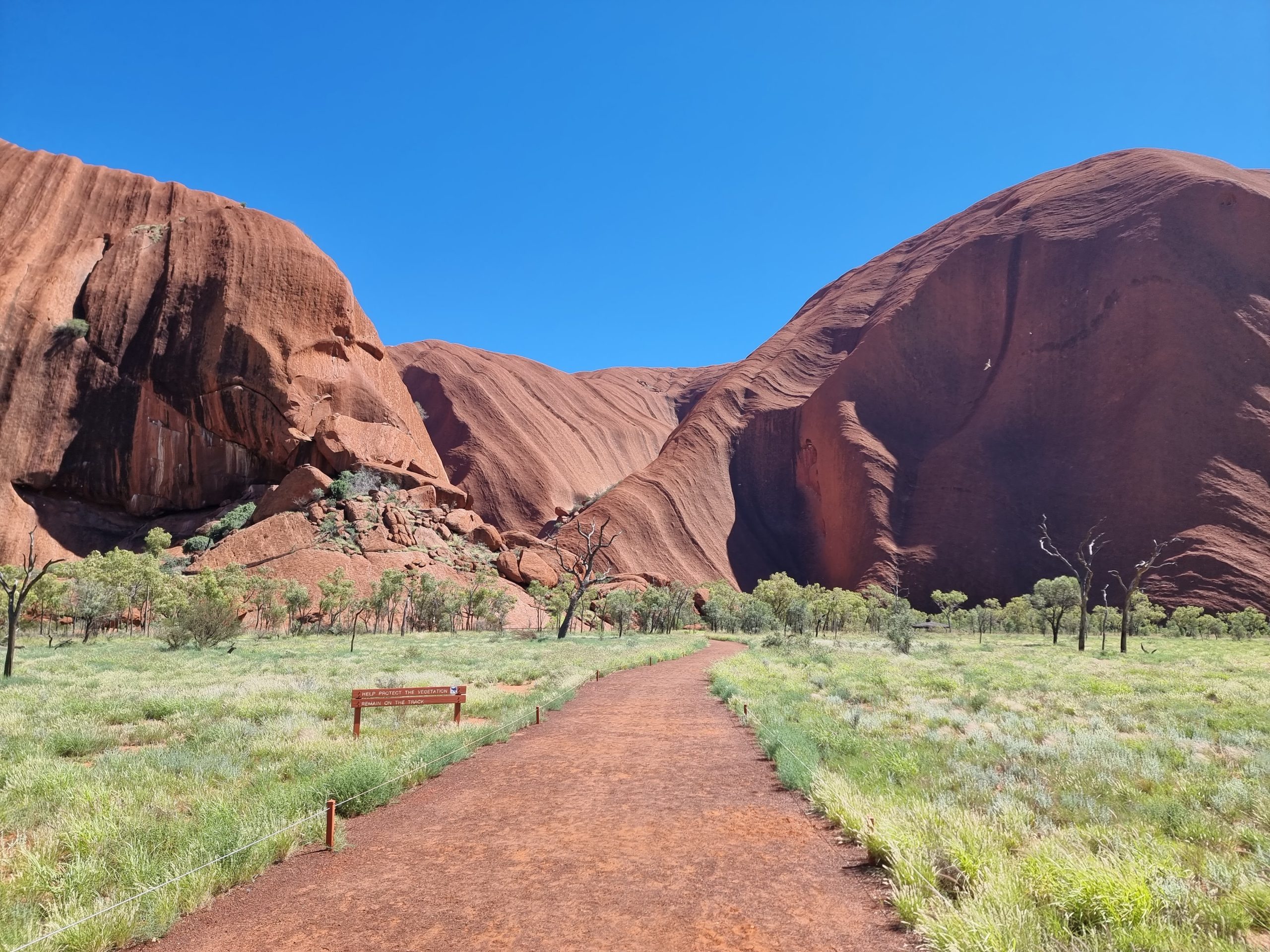
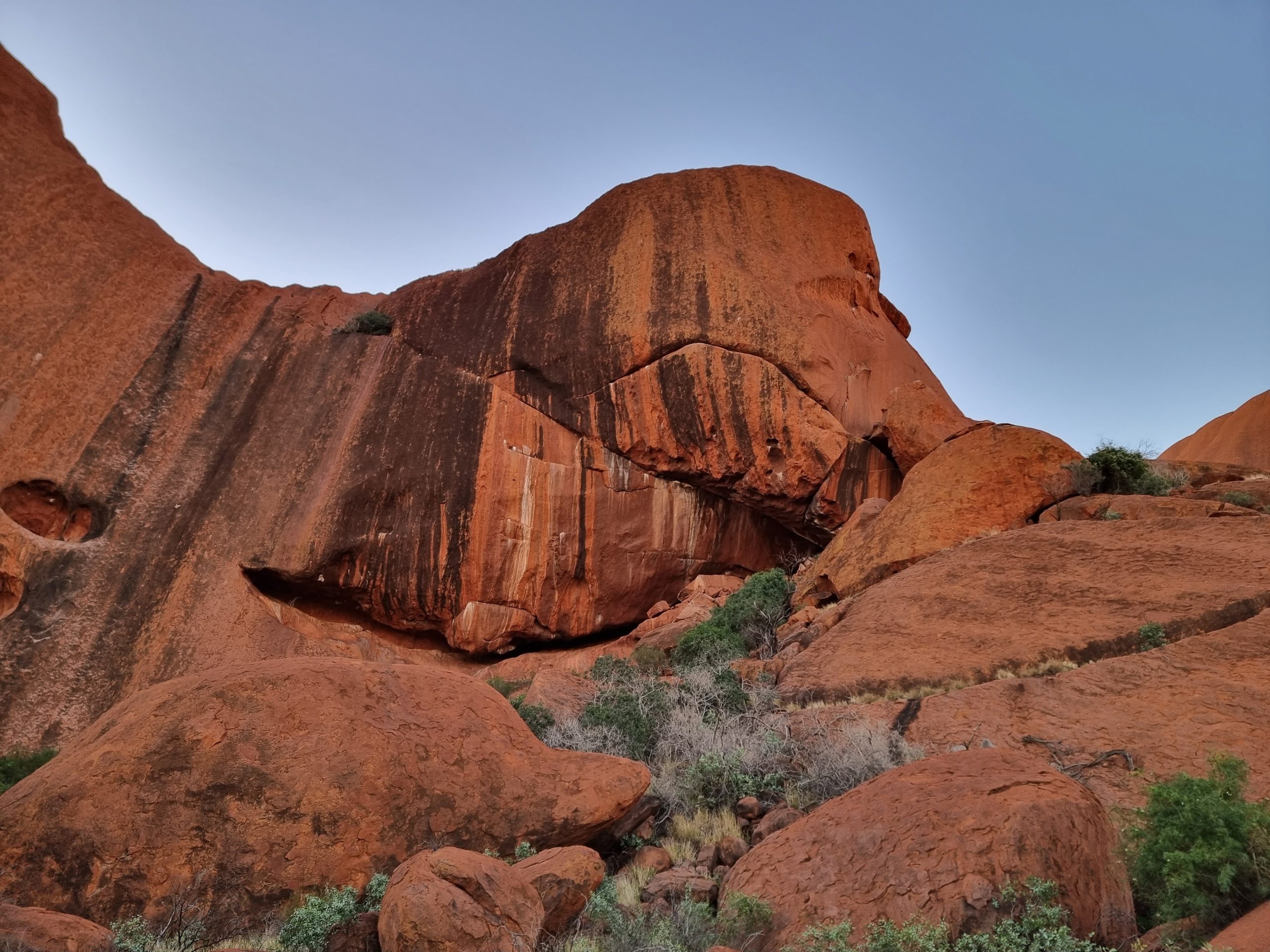
Have you noticed the deep pits, the jagged ridges, or the smooth caves at the base of Uluṟu? In Tjukurpa, these aren’t random erosions. They are the physical evidence of ancestral journeys. A certain cave might be the kitchen of an ancestral being; a specific vertical groove might be the track of a great snake. When you walk the base of the Rock, you are seeing the physical evidence of Anangu traditions and Tjukurpa etched into the stone.
Aṉangu don’t ‘believe’ these stories happened—they see the proof of them every day in the rock itself.
Why can’t I take a photo of some places at Uluru?
In Aṉangu culture, some knowledge is ‘open’ (for everyone) and some is ‘closed’ (restricted to men, women, or those of a certain ceremonial standing). When you see a Sensitive Site sign, it’s often because that part of the rock contains a sacred story that shouldn’t be seen by the uninitiated—including through a digital screen. Respecting these boundaries is the highest form of respect you can offer the community—it is a quiet acknowledgment that you are a guest in a living, sacred home. By the end of your visit, you’ll realize that Anangu traditions and Tjukurpa are not just history—they are a living, breathing guide for life in the desert.
Essential Vocabulary (Speaking the language of this special place)
The Traditional Owners of Uluṟu are the Aṉangu, who primarily speak Pitjantjatjara (pronounced pit-jan-ja-jara) and Yankunytjatjara (pronounced yan-kun-ja-jara). While they are distinct dialects with their own unique nuances, they are closely related branches of the Western Desert language family. For millennia, these spoken words have been the vessels for Tjukurpa, ensuring that the laws and stories of the Red Centre are passed down with precision from one generation to the next.
Uluru-Kata Tjuta National Park
Next stop: Continue your learning journey at the Cultural Centre
If you are ready to hear these stories from the people who hold them, your next stop must be the Cultural Centre.
Pro Tip: Don’t just rush through the Cultural Centre. Give yourself at least two hours to learn more about Aṉangu Traditions and Tjukurpa. Watch the films, look at the displays created by the families who live here, and if you’re lucky enough to see a ‘Punu’ (woodcarving) demonstration at Maruku Arts or dot painting at Walkatjara Gallery, stay and learn. That is where the true ‘Uluru Guide’ begins.