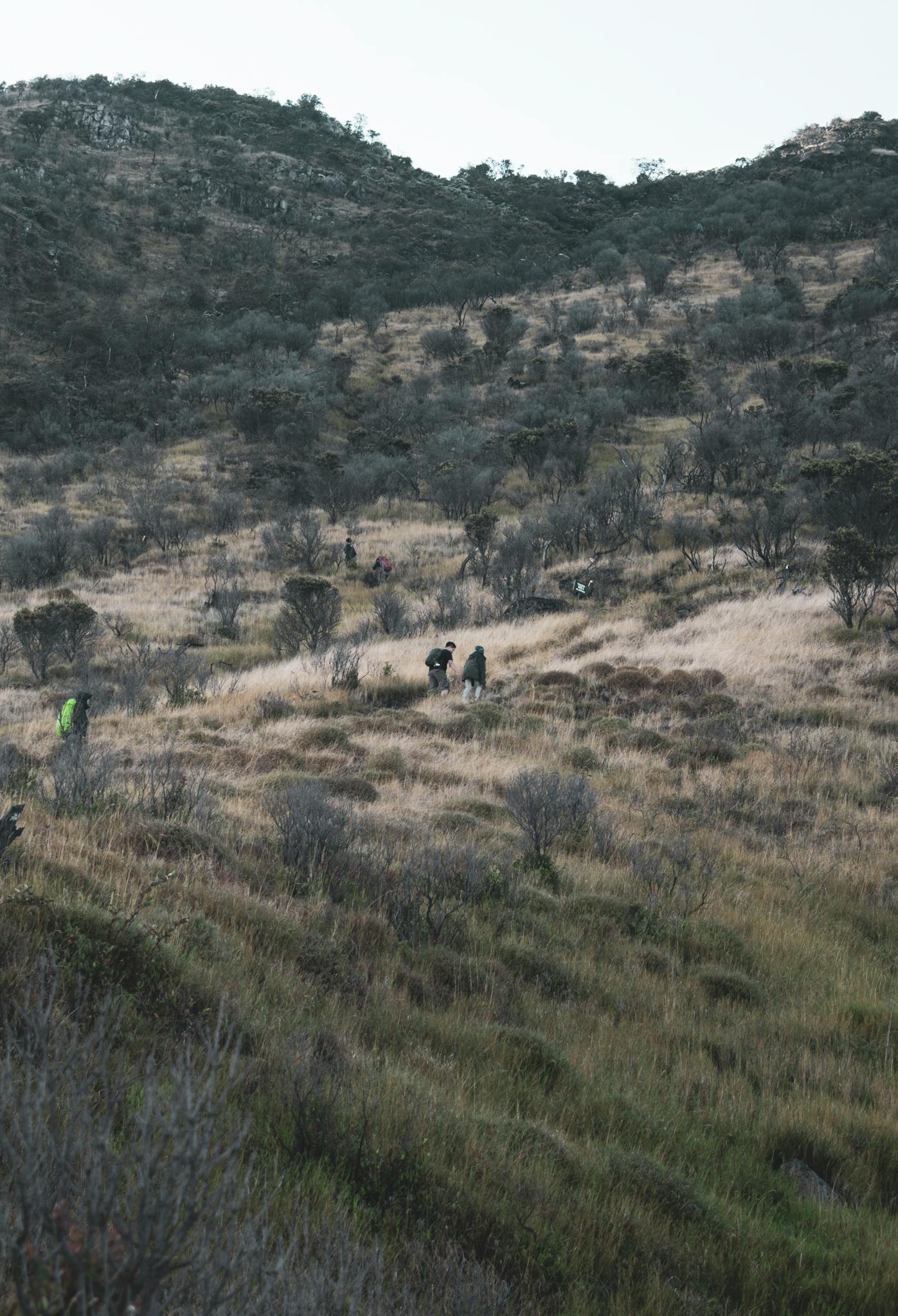
500 Million Years in the Making.
Explore the rare flora, resilient wildlife, and the ancient forces that forged the heart of the Red Centre.
Geology: The Arkose Secret
The Tip of the Iceberg
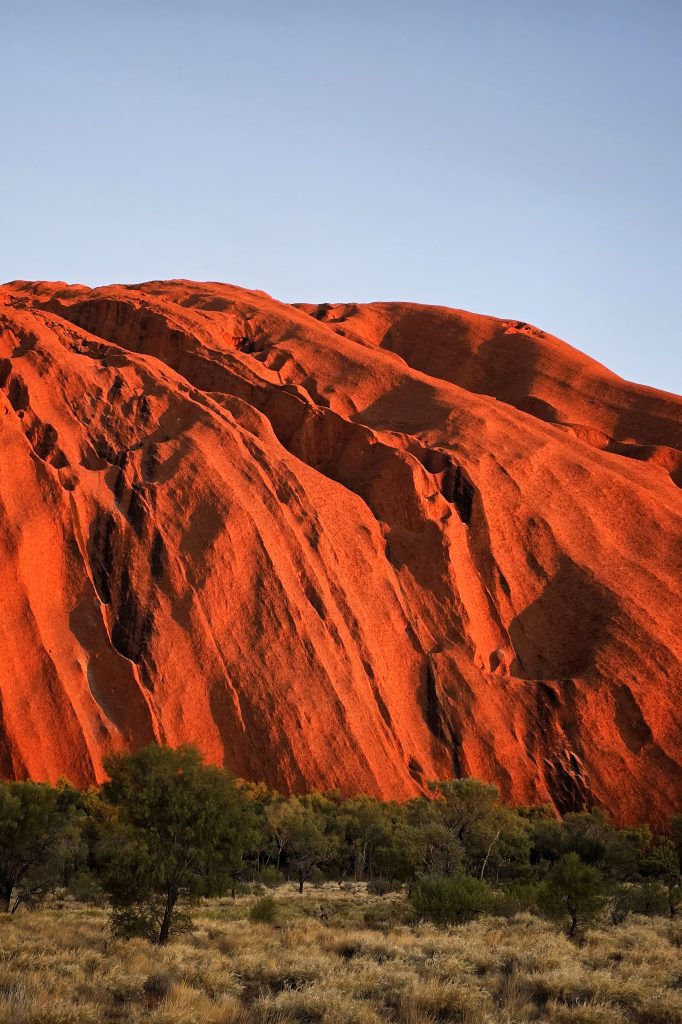
What you see is only the tip. Uluru is like an iceberg of desert sandstone (Arkose), tilting nearly vertically and extending up to 6km underground.
An ancient rusting rock
While it looks solid, the surface is a living record of oxidation—the iron in the rock ‘rusting’ to create that iconic glow.
Geology Stats
Age: Approx 500 million years
Height: 348 metres above the plain
Circumference: 9.4 kilometres
Rock Type: Arkose Sandstone
The Ancient Inland Sea
The sediment that formed the rock was deposited roughly 500 million years ago by massive fans of sand and gravel. These materials were washed down from an ancient mountain range into a vast, shallow inland sea that once covered the centre of Australia.
Vertical Layers of History
Unlike most mountains where layers of rock lie flat (horizontally), the “ribs” or ridges you see on Uluru’s surface are actually vertical. Massive tectonic shifts over millions of years literally tipped the entire formation on its side, leaving the layers standing straight up.
The Rare Magic of Uluru Waterfalls
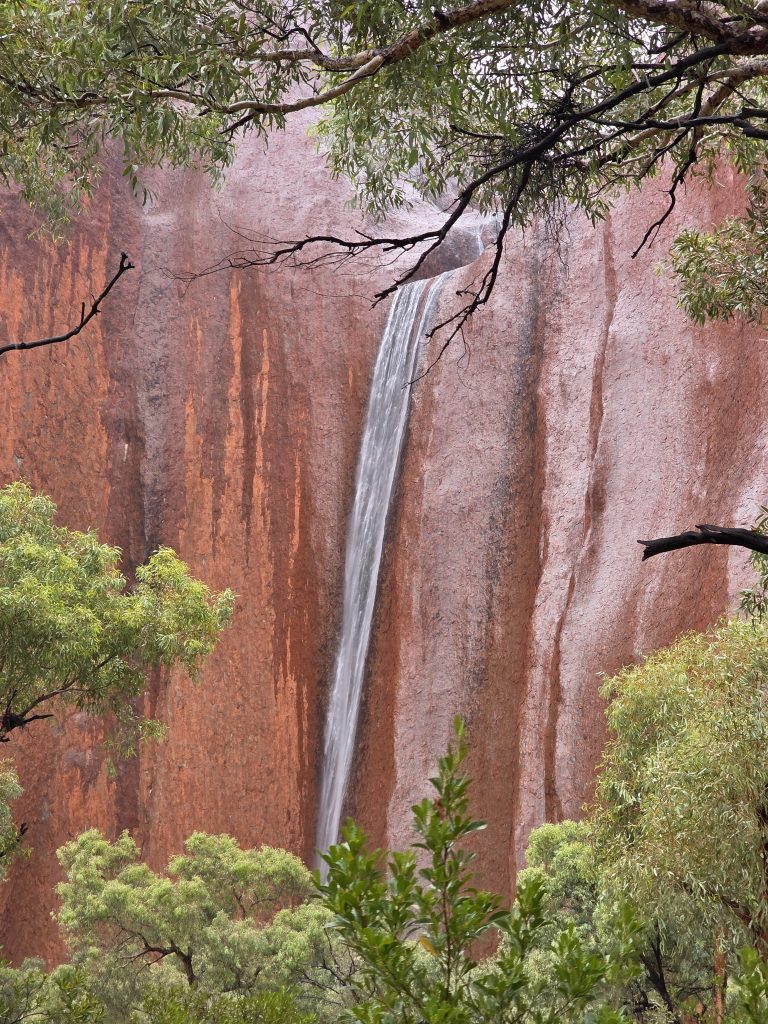
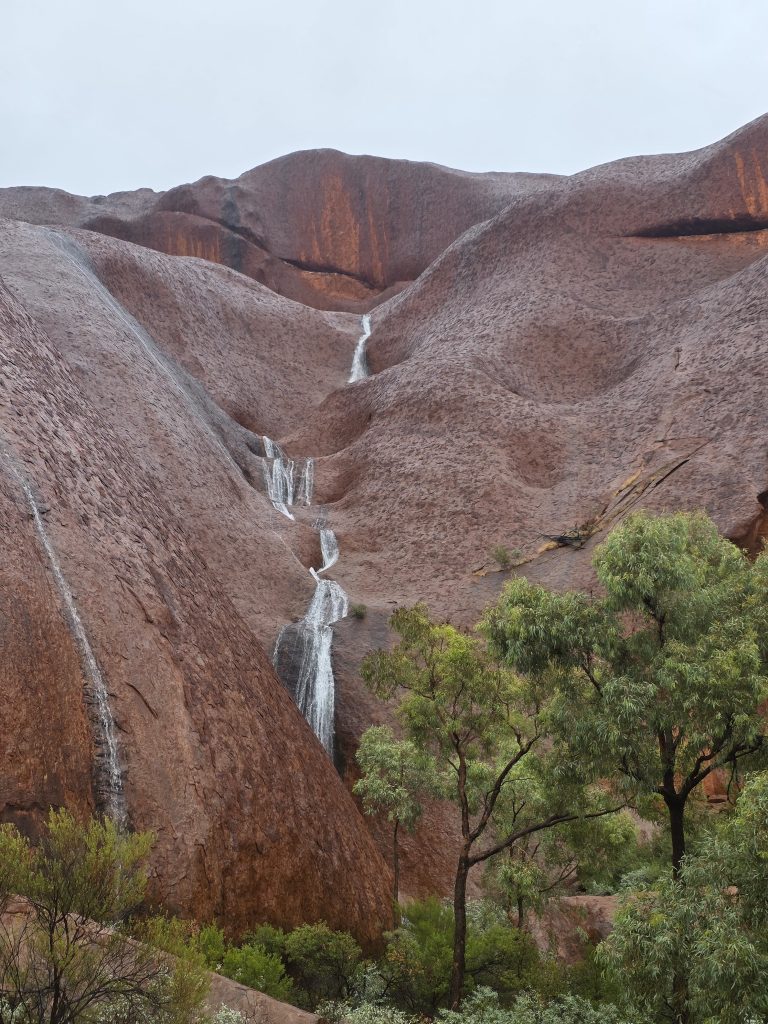
While most travellers hope for clear blue skies, locals know the real treasure is a rainy day. Only 1% of visitors ever witness what happens when a storm hits the Red Centre.
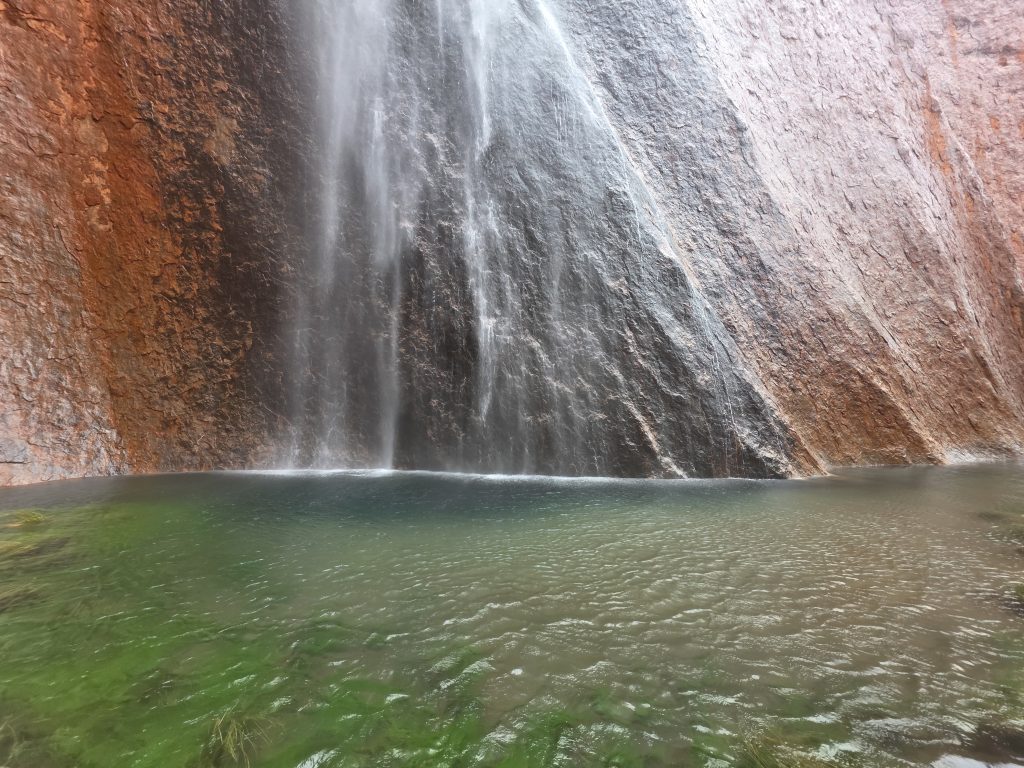
The Pro Tip: If the clouds break while you’re at the resort, drop everything. Grab your raincoat and head straight to the base of the rock—specifically Kantju Gorge (on the Mala Walk) or Mutitjulu Waterhole.
Within minutes, the 500-million-year-old grooves in the sandstone transform into vertical rivers. Raging waterfalls cascade hundreds of meters down the rock face, creating a thunderous sound and a spiritual atmosphere that no tour booking can guarantee. It is pure desert luck, and it is arguably the most breathtaking sight in the Southern Hemisphere.
Flora: The Desert’s survivalists
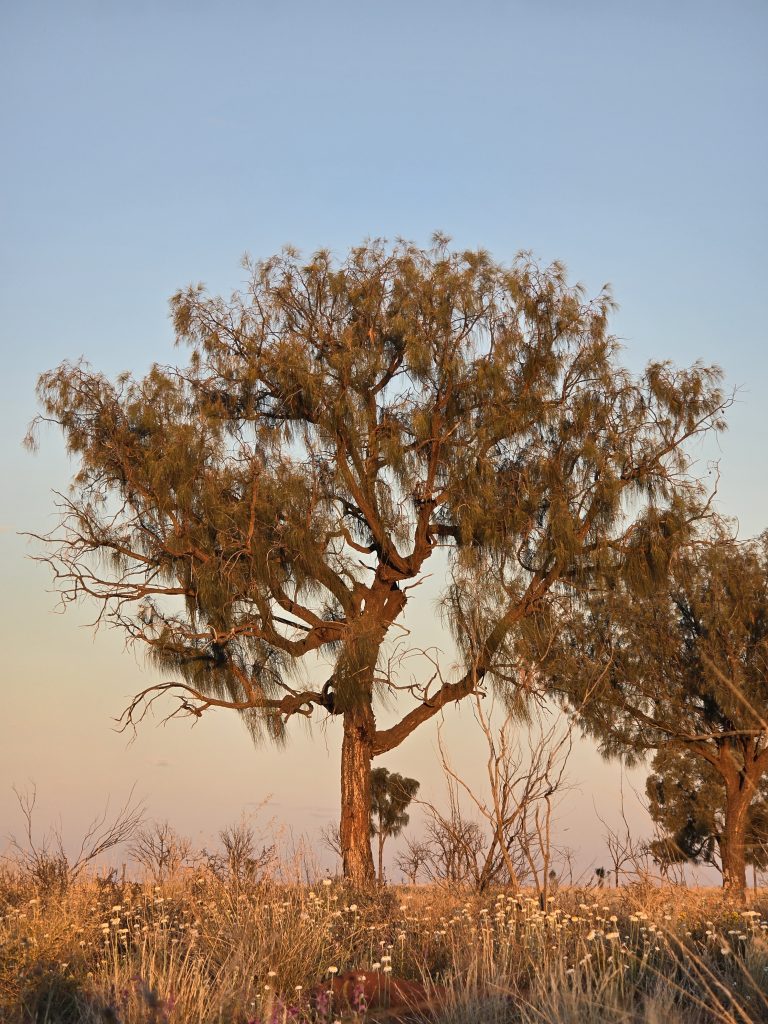
The Patient Shaggy Pole
Desert Oak (Kurkara): Look for the “shaggy poles” scattered across the dunes. These young Desert Oaks spend their first 20 years as narrow sticks to minimize sun exposure and conserve water. Only once their roots finally strike the deep water table do they branch out into the majestic, weeping trees that offer the outback’s best shade.
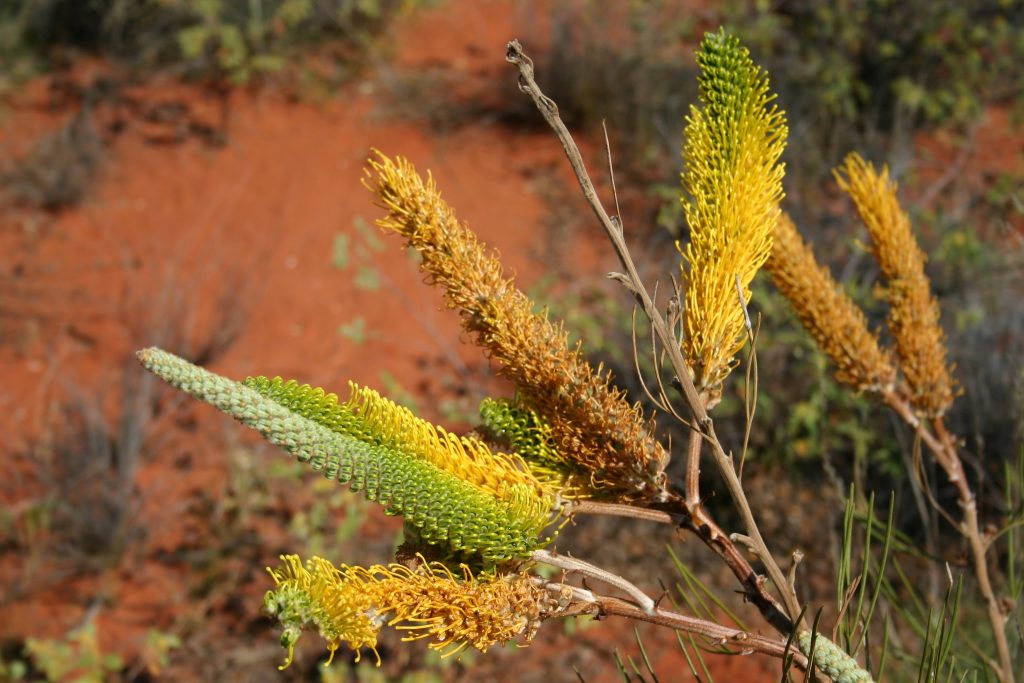
The Desert’s Natural Lollipop
Honey Grevillea (Kaliny-kalinypa): A burst of bright yellow against the red sand, the Honey Grevillea is more than just a pretty flower. Its nectar-heavy blossoms are a traditional sweet treat for Aṉangu children. In the early morning, you can often see the nectar glistening, ready to be sipped straight from the stem.
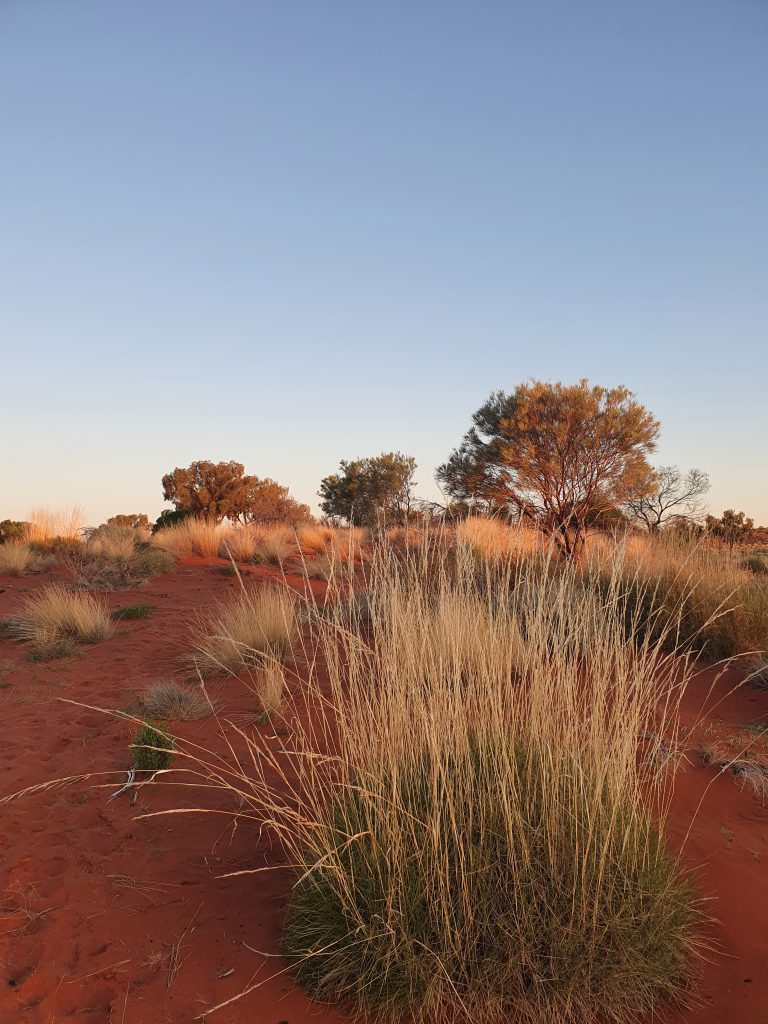
The Desert’s Super-Glue
Spinifex Grass (Tjampi): Don’t let the spiked clumps fool you—Spinifex is the backbone of desert technology. Aṉangu traditionally extract a powerful resin from the base of the grass, heating it to create a waterproof, rock-hard adhesive used to fix spearheads and tools. It is the literal glue that held desert life together.
Fauna: The Hidden Residents
The desert isn’t empty; it’s just shy. To the untrained eye, the Red Centre can seem still, but look closer at the sand and you’ll see a map of tracks—the morning newspaper of the outback. Most life here is crepuscular (active at the cool of dawn and dusk) or nocturnal, waiting out the heat in deep burrows or rocky crevices.
A Master of Moisture
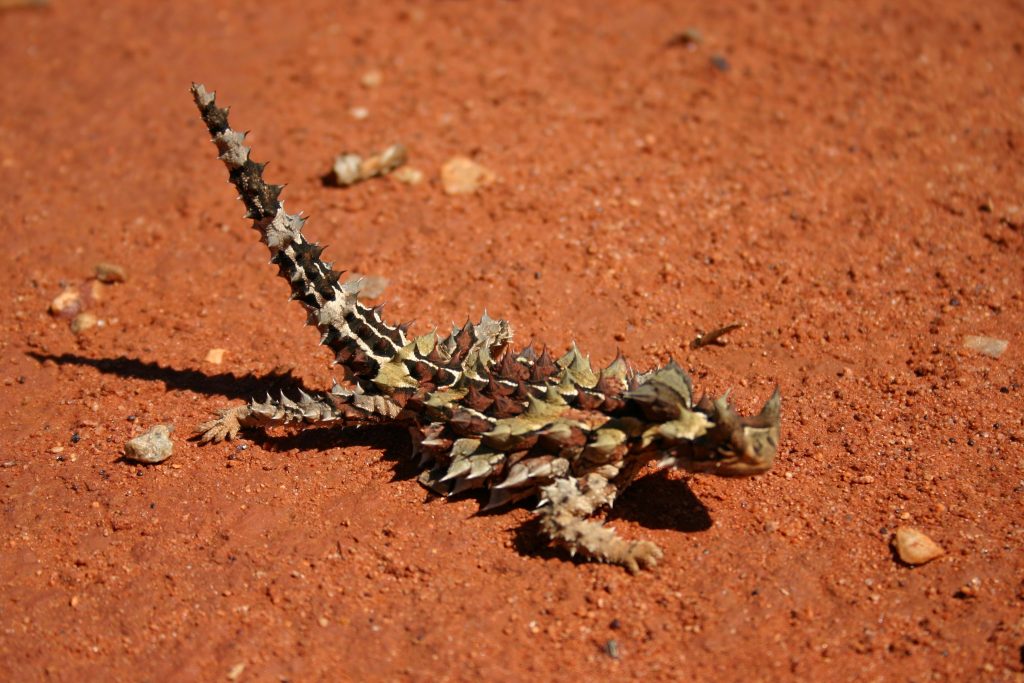
The Thorny Devil (Ngiyari): Looking like a miniature prehistoric dragon, the Thorny Devil is a true marvel of evolution. While its spikes are a formidable defense against predators, their most incredible secret is capillary action. Between its scales are microscopic grooves that ‘channel’ every drop of morning dew or rare rainfall directly toward the corners of its mouth. It can drink through its feet just by standing on damp sand—a vital survival trick in one of the world’s driest environments.
The Spirit of the Mala Walk
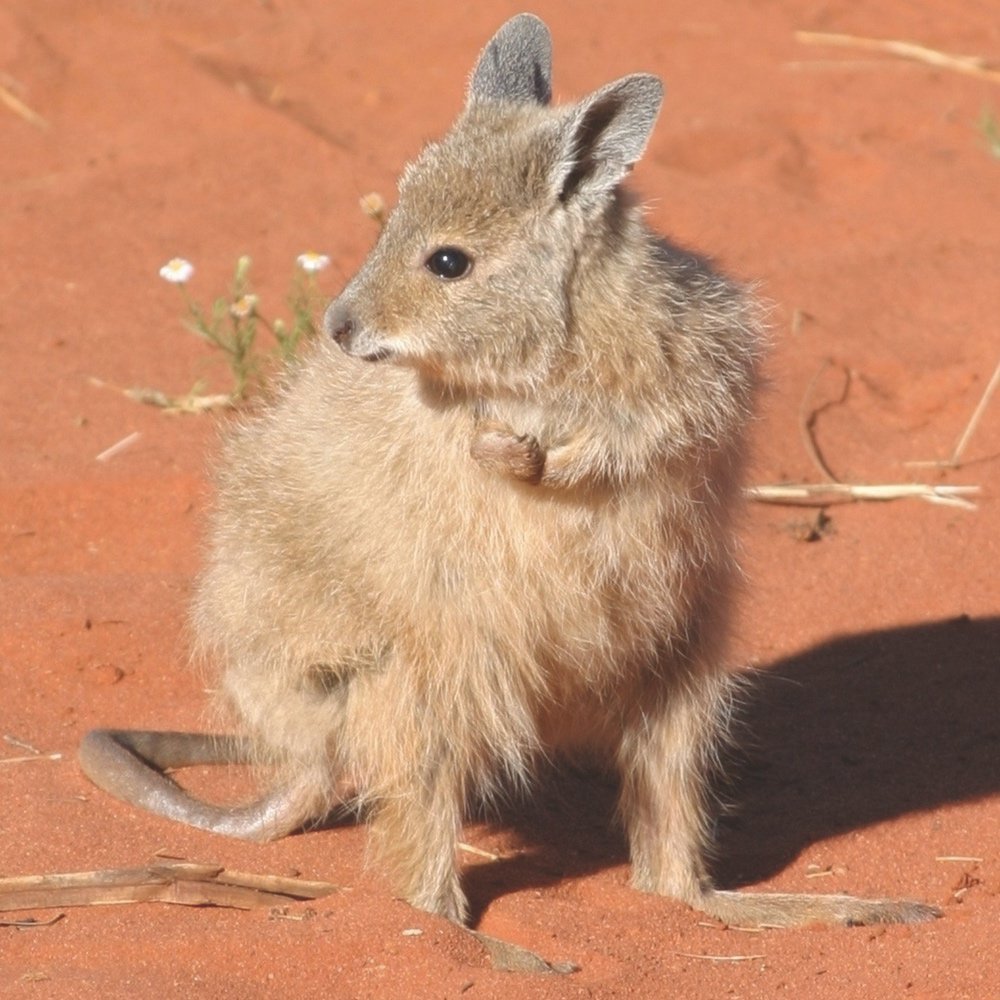
The Mala (Rufous Hare-Wallaby): The Mala is more than just a rare marsupial; it is central to the Aṉangu creation stories of Uluṟu. Once widespread, these tiny wallabies were pushed to the brink of extinction by feral predators. Today, they are a ‘Trust’ story of the desert. Thanks to intensive conservation efforts and a predator-proof sanctuary within the park, the Mala are returning. When you walk the Mala Walk at the base of Uluṟu, you aren’t just seeing rocks; you are walking through the ancestral home of a species saved by the combined efforts of traditional owners and modern science.
The Desert’s Top Predator
The Perentie (Ngintaka): If you are exceptionally lucky, you might spot Australia’s largest monitor lizard—the Perentie. Growing up to 2.5 meters long, these powerful goannas are master hiders. They can stand on their hind legs to scout for prey and are incredibly fast runners. In Aṉangu culture, the Ngintaka is a significant figure, and seeing one in the wild is considered a highlight of any desert journey.