
The Uluṟu Base Walk
Leave the crowds behind and discover the hidden caves, ancient stories, and shifting textures of the world’s most famous monolith.
An Intimate Encounter with the Rock.
The Base Walk is not just a hike; it is a slow-motion reveal of a 500-million-year-old masterpiece. Over 10.6 kilometres, you will transition from open desert plains to lush acacia woodlands and towering sheer rock faces. It is here, standing at the foot of the ‘ribs,’ that you truly feel the energy of the land that the Aṉangu have cared for since the beginning.
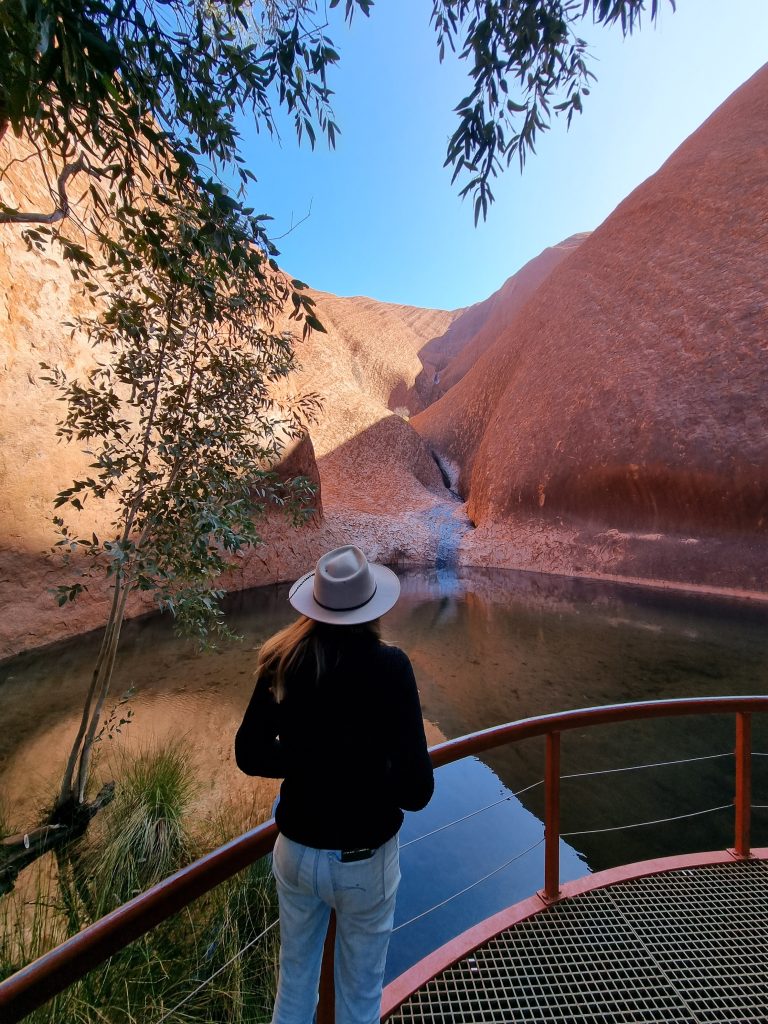
Navigating the Changing Landscapes and Sacred Sites of the Uluru Base Walk.
As you move clockwise around the rock, the landscape shifts dramatically. You’ll find yourself in the cool shade of the Mala Walk, standing beneath the cathedral-like heights of the North-East face, and eventually reaching the permanent serenity of the Mutitjulu Waterhole. Every turn offers a new perspective on the Arkose sandstone, revealing textures and colors that a camera lens can never fully capture from a distance.
Short on Time? Two Iconic Desert Walks.
If the full 10.6km loop feels like a bridge too far—or if the desert heat has already begun to climb—you don’t have to miss out on the magic of the monolith. By choosing one of these two iconic shorter walks, you can still step off the pavement and into the heart of the Aṉangu story. These paths are designed for accessibility and high cultural impact, leading you directly to the most sacred caves, ancient rock art, and hidden waterholes that define the ‘spirit’ of the rock. Whether you have 45 minutes or two hours, these are the essential ‘must-see’ stretches of the Uluṟu base.
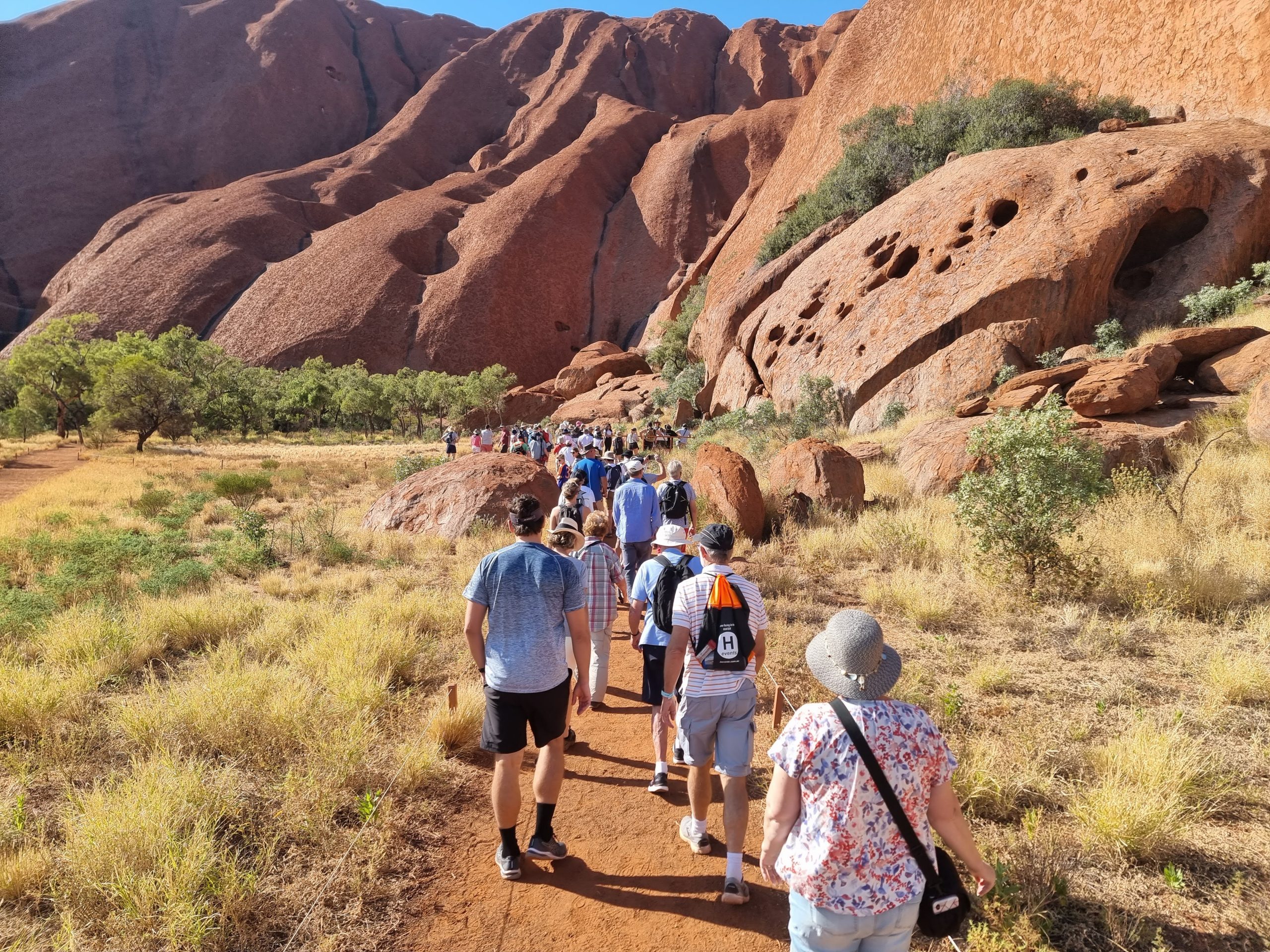
The Mala Walk (2km return)
The most culturally significant section. This is where the ancestral Mala (hare-wallaby) people first arrived. It’s shaded, easy, and contains the best examples of rock art.
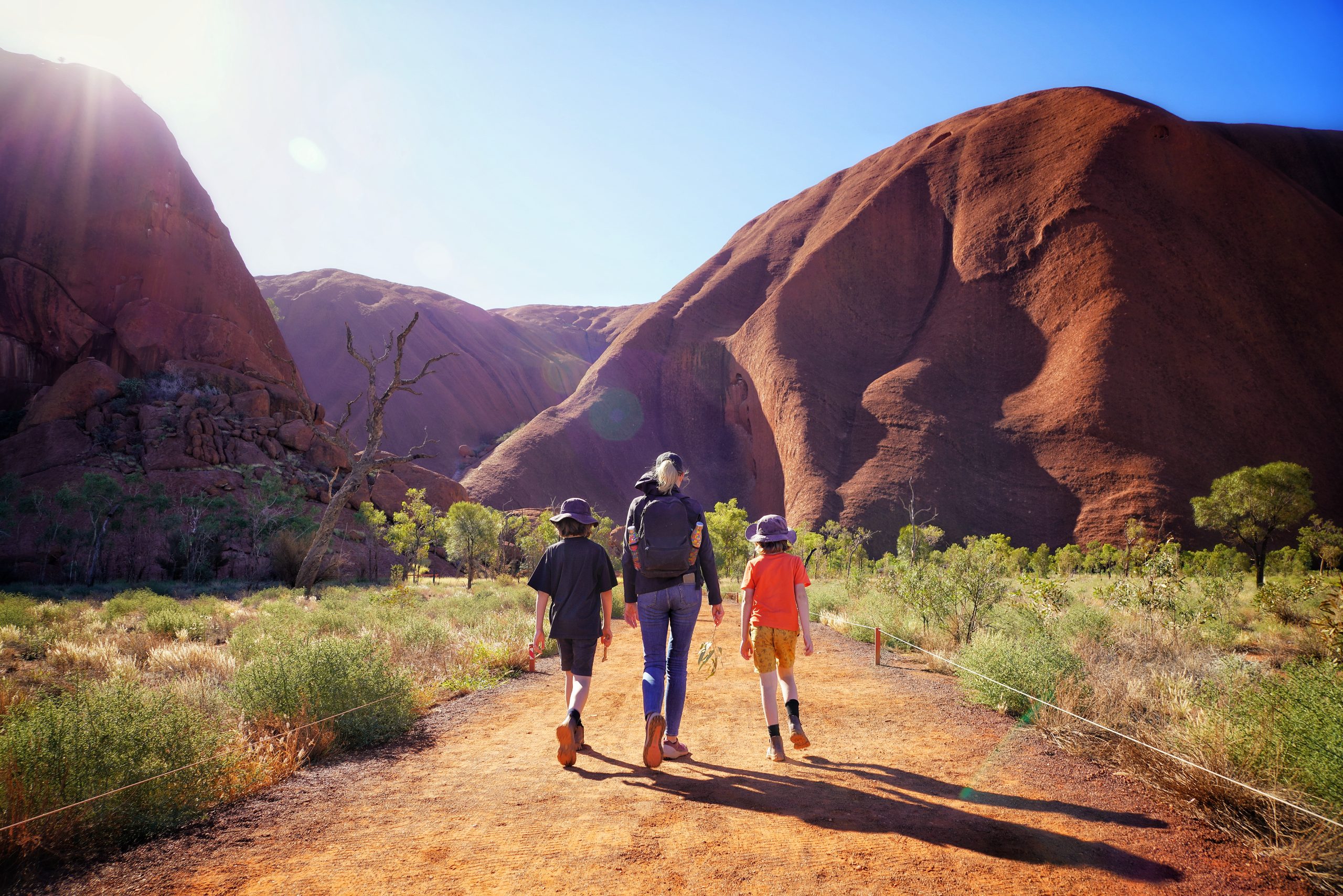
The Kuniya Walk (1km return)
Short and accessible. It leads to the park’s most famous waterhole. Look for the ‘Kuniya’ (python) and ‘Liru’ (poisonous snake) features in the rock face here.
The Practical Survival Guide for the Uluru Base Walk
Start Time
No later than 7:00 AM (October–March). The track can close early if the heat hits 36°C.
Water
Minimum 3 Liters. There are water tanks at various points, but don’t rely on them as your only source.
Footwear
Sturdy sneakers or hiking boots. The path is flat but sandy and uneven in parts.
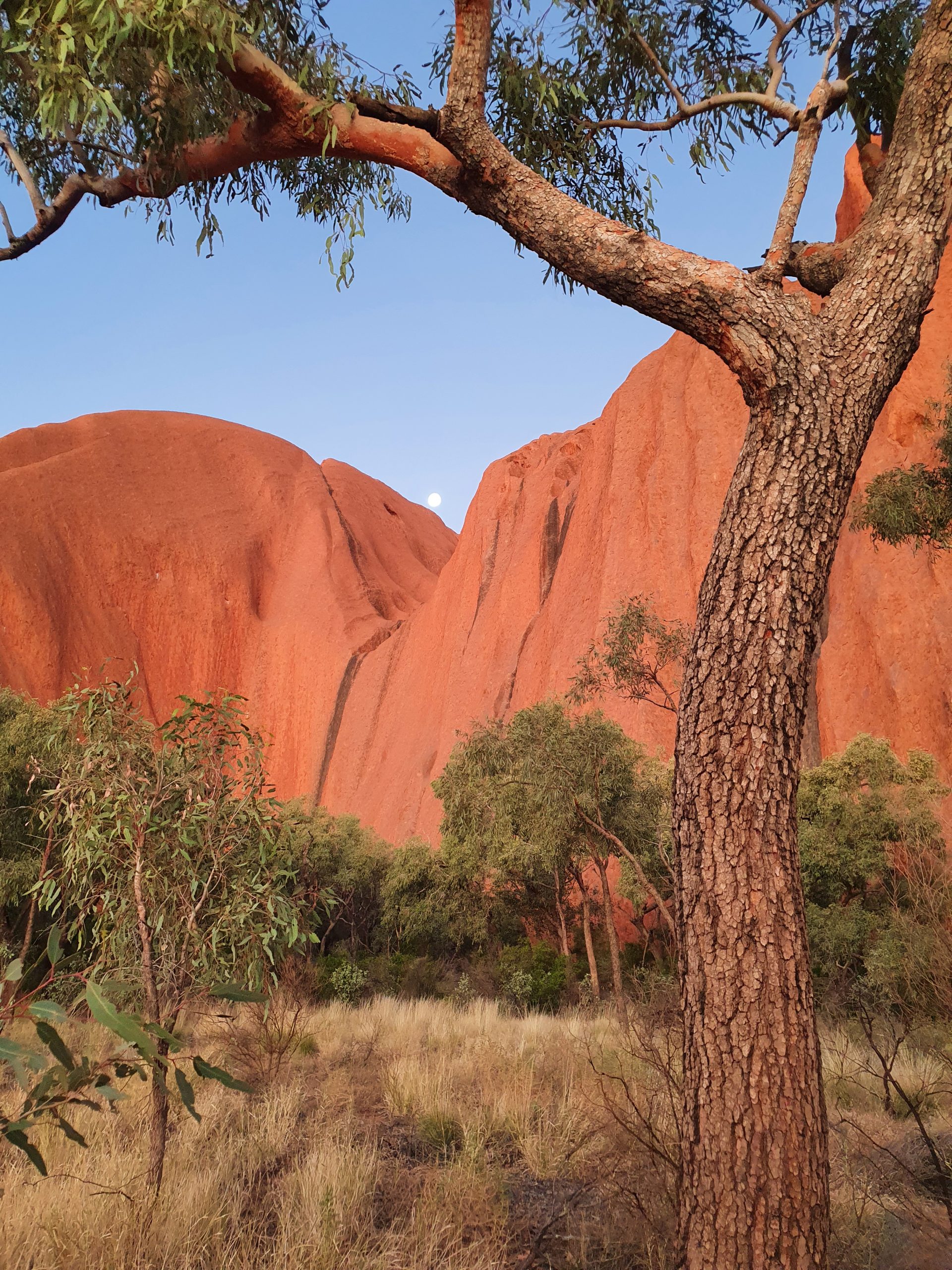
Walking time
Allow 3 to 4 hours for the full loop, including stops for photos and reading the interpretive signs.
Emergency Alarms
There are Emergency Call Devices located at various spots along the walk. You can use these to contact the Rangers in an emergency.
Sun Protection
Don’t forget to take a hat, plenty of sunscreen and maybe a fly net too!
From Guided Treks to Gliding on Two Wheels.
While many travelers choose to navigate the base independently, there is an undeniable magic in experiencing the rock alongside an expert guide or through a unique mode of transport. For those who want the full 10.6km story without the navigation, a Guided Sunrise Base Walk offers the perfect blend of physical challenge and deep cultural storytelling. If you’re looking for a faster, more exhilarating way to see every curve of the sandstone, a Segway Tour allows you to glide effortlessly around the entire circumference. Whether you choose the quiet of a morning trek or the breeze of a sunset roll, these curated experiences ensure you don’t miss a single sacred fold of the ‘Big Rock.